
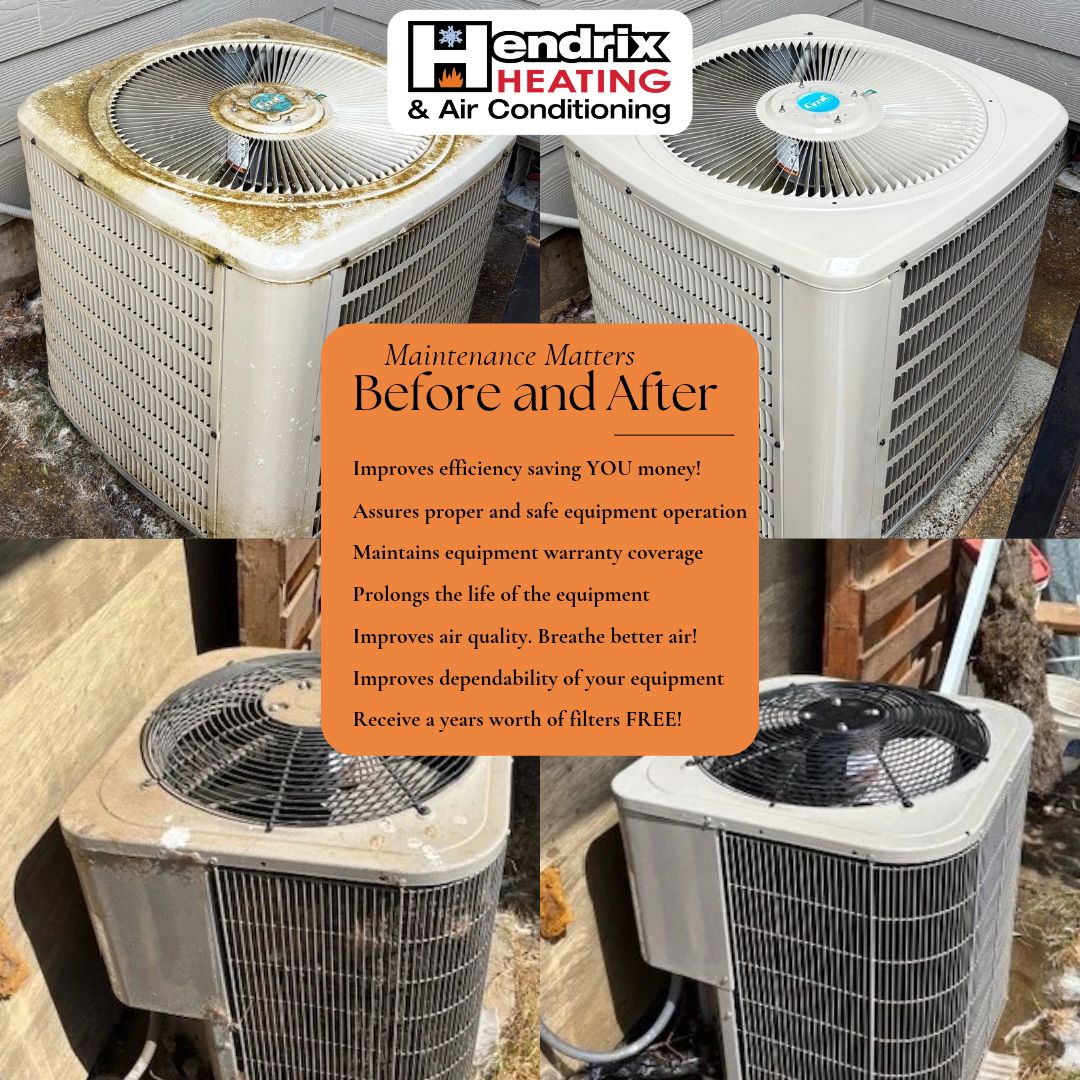
Take a look at these photos. Same outdoor units, same homes. The only difference is a maintenance visit.
The before shots show what years without care looks like: grime caked on the cabinet, debris packed into the coil, and a fan working harder than it should. The after shots show the same equipment once it gets the attention it needs.
Clean looks better, but what happens inside your system matters more. Here's what regular maintenance actually does for your home, your comfort, and your wallet.
6 ways maintenance pays off
1. It improves efficiency and saves you money
When filters, coils, and blower parts get dirty, your system has to run longer to keep your home comfortable. ENERGY STAR notes that airflow problems alone can cut efficiency by up to 15 percent. A tune-up clears those restrictions so your system does its job without wasting energy.
2. It keeps your equipment running properly and safely
During a visit, we tighten electrical connections, test safety controls, and confirm your system starts, runs, and shuts down the way it should. On gas furnaces, we also check gas connections, burner operation, and the heat exchanger. Loose wiring or a dirty burner can make equipment run less safely, so these checks matter.
3. It helps protect your warranty coverage
Many manufacturer warranties expect your equipment to be properly cared for. Regular professional maintenance, with a record of every visit, gives you documentation if you ever need to file a warranty claim. Not sure what your warranty requires? Our team can help you check.
4. It helps your equipment last longer
Dirty coils, loose electrical connections, incorrect refrigerant levels, and clogged filters all wear down major components over time. Catching and correcting them each year reduces the strain on your system, so you get more years out of your investment.
5. It improves the air you breathe
Your heating and cooling system moves the air in your home through its filter again and again. A fresh filter and clean components help capture dust, pollen, and other particles instead of sending them back into your rooms. That matters in the Valley, where grass pollen season can be rough.
6. It makes your system more dependable
Most breakdowns don't come out of nowhere. They start as a worn part, a weak capacitor, or a clogged drain line that nobody caught. Maintenance gives our technicians a chance to spot small problems early, before they turn into a no-heat call on the coldest night of the year.
What happens during a maintenance visit
A typical tune-up from our team includes:
Checking thermostat settings and system controls
Tightening electrical connections and measuring motor voltage and current
Lubricating moving parts
Inspecting and clearing the condensate drain
Cleaning the coils and checking refrigerant levels on air conditioners and heat pumps
Checking gas connections, burner operation, and the heat exchanger on gas furnaces
Inspecting or replacing your air filter
Every visit is done by a Hendrix employee, never a subcontractor. The technician working on your system answers to us and to you.
How often should you schedule maintenance?
Many people prefer to have their system components serviced right before the season it’ll be working the hardest. This method of having air conditioners serviced in the spring and furnaces/heat pumps in the fall before the cold heads our way, is a widely used strategy. However as long as your entire system is maintained annually, it really doesn’t matter what time of year it happens-it just NEEDS TO HAPPEN! If you have a heat pump, maintaining the indoor and outdoor equipment must happen annually as well.
Check your filter once a month and change it when it looks dirty. Rule of thumb is every 3 months for 1’ pleated filters.
Keep leaves, grass clippings, and plants cleared away from your outdoor unit. Fall leaves are the usual culprit here in the Willamette Valley.
Keep supply and return vents open and free of furniture and rugs.
Pay attention to new noises, smells, or rooms that won't stay comfortable, and call us early.
Make maintenance automatic with a Hendrix membership
The easiest way to stay on schedule is to let us keep track for you. A Hendrix membership includes:
A reminder when regular maintenance is due for your heating and cooling equipment
24/7 access to on-call techs
Service discounts
Have an older system? If yours was installed before 2010, it may still run on R-22 refrigerant. Your maintenance visit is a good time to ask about it. Here's what R-22 means for your home.
Schedule your maintenance visit
We've cared for Mid-Willamette Valley homes since 1952, and our team is ready to keep yours comfortable for years to come. Schedule your tune-up online or call us at (541) 753-6760.
Comfort For Life.
Frequently asked questions
How often should I have my HVAC system maintained?
Twice a year is best: once in spring for cooling and once in fall for heating. Heat pumps heat and cool your home, so they benefit from both visits.
Is HVAC maintenance really worth it?
Yes. Regular maintenance helps your system run more efficiently, last longer, and break down less often. It also gives our technicians a chance to catch small problems before they become expensive repairs.
Do I need maintenance if my system is new?
Yes. New equipment still collects dust and debris, and many manufacturer warranties expect regular professional maintenance. Starting a routine early helps protect your investment from day one.
Can I just change my filter myself instead?
Changing your filter is important, and we encourage it. But a tune-up covers much more, including electrical connections, refrigerant levels, coil cleaning, drain lines, and safety controls that need a trained technician.
What do Hendrix members get?
Hendrix members get regular maintenance, a year's worth of filters free, and 24/7 emergency service. Visit our membership page or call (541) 753-6760 for full details.